Your Gregor mendel pea plant experiment images are ready in this website. Gregor mendel pea plant experiment are a topic that is being searched for and liked by netizens today. You can Download the Gregor mendel pea plant experiment files here. Download all free images.
If you’re searching for gregor mendel pea plant experiment pictures information related to the gregor mendel pea plant experiment interest, you have pay a visit to the ideal blog. Our site always provides you with suggestions for seeking the highest quality video and image content, please kindly surf and find more informative video content and images that match your interests.
Gregor Mendel Pea Plant Experiment. Pea plants make a convenient system for studies of inheritance and they are still studied by some geneticists today. A short plant that is heterozygous for green pea pods is crossed with a plant that is heterozygous for both traits. Summary of Gregor Mendels data showing the composition of the 7 F2 dominants in his. He decided to study heredity because he was working in the garden and saw different traits about plants and got curious.
 Mendel S Monohybrid Cross Plant Experiments Genetics Biology From pinterest.com
Gregor Mendel discovered the basic principles of heredity through experiments with pea plants long before the discovery of DNA and genesMendel was an Augustinian monk at St Thomass Abbey near Brünn now Brno in the Czech Republic. The organisms that are used as the original mating in an experiment are called the parental generation and are marked by P in science textbooks. Mendels Experiments Gregor studied seven traits of the pea plant. Gregor Mendel known as the father of modern genetics was born in Austria in 1822. His experiments showed that the inheritance of certain traits in pea plants follows particular patterns subsequently becoming the foundation of modern genetics and leading to the study of heredity. Gregor Johann Mendel was a monk and teacher with interests in astronomy and plant breeding.
These led to the discovery of the genetic basis of inheritance the traits that are received by offspring from parents and resulted in him being.
Gregor Mendel studied 30000 pea plants in 8 years. His experiments showed that the inheritance of certain traits in pea plants follows particular patterns subsequently becoming the foundation of modern genetics and leading to the study of heredity. Gregor Johann Mendel turned the study of heredity into a science. Pick two of those to breed together for four new children and so on. He decided to study heredity because he was working in the garden and saw different traits about plants and got curious. Mendel performed a series of experiments with pea plants in the 19th century.
 Source: pinterest.com
Gregor Mendel 182284 is an Austrian monk credited with discovering the principles underlying genes and inheritance. Mendel carried out his key experiments using the garden pea Pisum sativum as a model system. Gregor Johann Mendel turned the study of heredity into a science. Mendels Second Experiment In Mendels second experiment he allowed the offspring from the first experiment to pollinate each other. One may also ask why did Mendel study pea plants.
 Source: pinterest.com
First I love to use the Gregor Mendel Digital Interactive LessonUsing interactive lessons in the classroom are a great way to reduce cognitive loadThey are extremely engaging and allow students to learn content in chunks and apply it before moving on. You can breed a plant with itself There are two attributes passed between generations in this simulation. For Gregor Mendel pea plants were fundamental in allowing him to understand the means by which traits are inherited between parent and offspring. This is an interactive pea experiment where you can breed your own hybrid pea plants. A brief explanation of the two experiments is given below.
 Source: pinterest.com
Learn about Gregor Mendel his seminal experiments and the basic foundations of genetics in this videoPicture of Mendel by Hugo Iltis. The organisms that are used as the original mating in an experiment are called the parental generation and are marked by P in science textbooks. There were three major steps to Mendels experiments. You can breed a plant with itself There are two attributes passed between generations in this simulation. This is an interactive pea experiment where you can breed your own hybrid pea plants.
 Source: pinterest.com
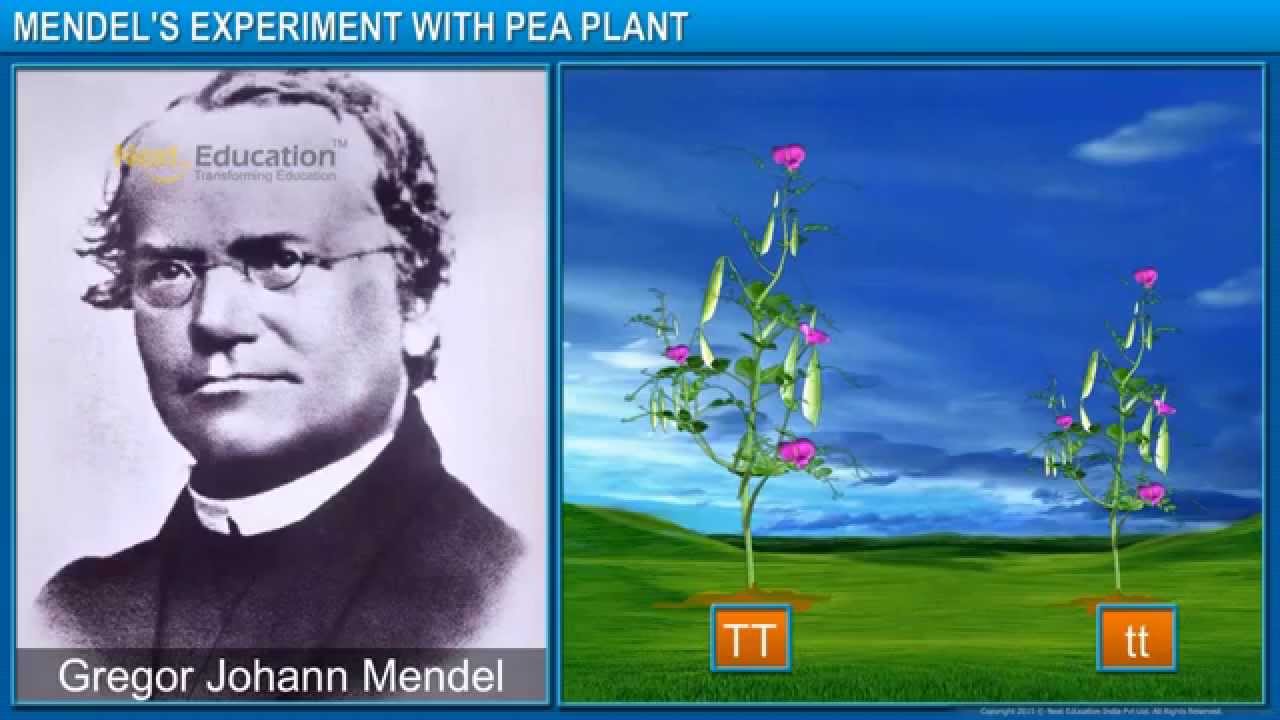
In Mendels first experiment he crossed a short plant and a tall plant. Mendels Second Experiment In Mendels second experiment he allowed the offspring from the first experiment to pollinate each other. A short plant that is heterozygous for green pea pods is crossed with a plant that is heterozygous for both traits. He carried out experiments crossing mating plants with different characteristics. You will start with two parent plants and end up with four child plants.
 Source: pinterest.com
A brief explanation of the two experiments is given below. Pea plants make a convenient system for studies of inheritance and they are still studied by some geneticists today. He carried out experiments crossing mating plants with different characteristics. His experiments showed that the inheritance of certain traits in pea plants follows particular patterns subsequently becoming the foundation of modern genetics and leading to the study of heredity. During the mid-nineteenth century Johann Gregor Mendel experimented with pea plants to develop a theory of inheritance.
 Source: pinterest.com
Useful features of peas include their rapid life cycle and the production of lots and lots of seeds. Pick two of those to breed together for four new children and so on. You will start with two parent plants and end up with four child plants. One may also ask why did Mendel study pea plants. First he produced a parent generation of true-breeding plants.
 Source: pinterest.com
Mendel is known as the father of genetics because of his ground-breaking work on inheritance in pea plants 150 years ago. Mendel carried out his key experiments using the garden pea Pisum sativum as a model system. One may also ask why did Mendel study pea plants. First I love to use the Gregor Mendel Digital Interactive LessonUsing interactive lessons in the classroom are a great way to reduce cognitive loadThey are extremely engaging and allow students to learn content in chunks and apply it before moving on. His experiments showed that the inheritance of certain traits in pea plants follows particular patterns subsequently becoming the foundation of modern genetics and leading to the study of heredity.
 Source: pinterest.com
Mendels Experiments Gregor studied seven traits of the pea plant. Gregor Johann Mendel was a monk and teacher with interests in astronomy and plant breeding. These led to the discovery of the genetic basis of inheritance the traits that are received by offspring from parents and resulted in him being. Mendels Second Experiment In Mendels second experiment he allowed the offspring from the first experiment to pollinate each other. Every single pea in the first generation crop marked as f1 was as yellow and as round as was the yellow round parent.
 Source: pinterest.com
This is an interactive pea experiment where you can breed your own hybrid pea plants. Gregor Johann Mendel turned the study of heredity into a science. He combined his knowledge in science and mathematics and observed the number of plants showing traits in his experiment and was able to formulate the law of inheritance. Mendel performed a series of experiments with pea plants in the 19th century. Mendels Second Experiment In Mendels second experiment he allowed the offspring from the first experiment to pollinate each other.
 Source: in.pinterest.com
Gregor Mendel studied 30000 pea plants in 8 years. Mendel experimented on a pea plant and considered 7 main contrasting traits in the plants. For Gregor Mendel pea plants were fundamental in allowing him to understand the means by which traits are inherited between parent and offspring. In 1843 while a monk in the Augustian St Thomass Abbey in Brünn Austria now Brno Czech Repubic Mendel examined the physical appearance of the abbeys pea plants Pisum sativum and noted inconsistencies between what he saw and. Gregor Mendel describes his experiments with peas showing that heredity is transmitted in discrete units.
Source: pinterest.com
Working with garden pea plants Mendel found that crosses between parents that differed for one trait produced F 1 offspring that all expressed one parents traits. Pea plants make a convenient system for studies of inheritance and they are still studied by some geneticists today. First I love to use the Gregor Mendel Digital Interactive LessonUsing interactive lessons in the classroom are a great way to reduce cognitive loadThey are extremely engaging and allow students to learn content in chunks and apply it before moving on. Gregor Mendel 182284 is an Austrian monk credited with discovering the principles underlying genes and inheritance. Gregor Mendel Pea Plant Experiment PPT and Google Slides.
 Source: pinterest.com
The offspring were all tall. From earliest time people noticed the resemblance between parents and offspring among animals and plants as well as in human families. In Mendels first experiment he crossed a short plant and a tall plant. Mendel experimented on a pea plant and considered 7 main contrasting traits in the plants. This is an interactive pea experiment where you can breed your own hybrid pea plants.
 Source: pinterest.com
Gregor Mendel describes his experiments with peas showing that heredity is transmitted in discrete units. In the classic pea experiment performed by Austrian monk Gregor Mendel the Father of Genetics in the 18th century tall plants are dominant over short plants and green pea pods are dominant over yellow pods. First I love to use the Gregor Mendel Digital Interactive LessonUsing interactive lessons in the classroom are a great way to reduce cognitive loadThey are extremely engaging and allow students to learn content in chunks and apply it before moving on. Gregor Mendel Pea Plant Experiment PPT and Google Slides. Pea plants make a convenient system for studies of inheritance and they are still studied by some geneticists today.
 Source: pinterest.com
He decided to study heredity because he was working in the garden and saw different traits about plants and got curious. The organisms that are used as the original mating in an experiment are called the parental generation and are marked by P in science textbooks. Mendel experimented on a pea plant and considered 7 main contrasting traits in the plants. You will start with two parent plants and end up with four child plants. First he produced a parent generation of true-breeding plants.
 Source: in.pinterest.com
Mendels Second Experiment In Mendels second experiment he allowed the offspring from the first experiment to pollinate each other. The traits that were visible in the F 1 generation are referred to as dominant and traits that disappear in the F 1 generation are described as recessive. He carried out experiments crossing mating plants with different characteristics. Mendel carried out his key experiments using the garden pea Pisum sativum as a model system. In Mendels first experiment he crossed a short plant and a tall plant.
 Source: pinterest.com
Mendel carried out his key experiments using the garden pea Pisum sativum as a model system. Then he conducted both the experiments to determine the aforementioned inheritance laws. Gregor Johann Mendel turned the study of heredity into a science. He chose pea plants because they were easy to grow could be bred rapidly and had several observable characteristics like petal color and pea color. This was how he arrived to his 6733 or 2031 hybrid-to-pure dominant ratio using 100 F2 test plants and 10 samples per test plant.
 Source: pinterest.com
First I love to use the Gregor Mendel Digital Interactive LessonUsing interactive lessons in the classroom are a great way to reduce cognitive loadThey are extremely engaging and allow students to learn content in chunks and apply it before moving on. This is an interactive pea experiment where you can breed your own hybrid pea plants. When the F 1 plants in Mendels. Mendel experimented on a pea plant and considered 7 main contrasting traits in the plants. Summary of Gregor Mendels data showing the composition of the 7 F2 dominants in his.
 Source: pinterest.com
Gregor Johann Mendel turned the study of heredity into a science. Most people would assume the offspring would be medium-sized plants but Mendel saw something unexpected. From earliest time people noticed the resemblance between parents and offspring among animals and plants as well as in human families. These led to the discovery of the genetic basis of inheritance the traits that are received by offspring from parents and resulted in him being. Seed color seed shape flower position flower color pod shape pod color and the stem length.
This site is an open community for users to share their favorite wallpapers on the internet, all images or pictures in this website are for personal wallpaper use only, it is stricly prohibited to use this wallpaper for commercial purposes, if you are the author and find this image is shared without your permission, please kindly raise a DMCA report to Us.
If you find this site adventageous, please support us by sharing this posts to your favorite social media accounts like Facebook, Instagram and so on or you can also bookmark this blog page with the title gregor mendel pea plant experiment by using Ctrl + D for devices a laptop with a Windows operating system or Command + D for laptops with an Apple operating system. If you use a smartphone, you can also use the drawer menu of the browser you are using. Whether it’s a Windows, Mac, iOS or Android operating system, you will still be able to bookmark this website.