Your Hydrogen peroxide and yeast experiment images are ready in this website. Hydrogen peroxide and yeast experiment are a topic that is being searched for and liked by netizens today. You can Download the Hydrogen peroxide and yeast experiment files here. Get all royalty-free photos.
If you’re searching for hydrogen peroxide and yeast experiment pictures information related to the hydrogen peroxide and yeast experiment topic, you have pay a visit to the right site. Our site frequently provides you with suggestions for seeking the maximum quality video and image content, please kindly surf and locate more enlightening video content and graphics that match your interests.
Hydrogen Peroxide And Yeast Experiment. Enhanced growth inhibition of 16 yeast species exposed to hydrogen peroxide and iodine concurrently. To determine percentage you need to first determine how many moles of hydrogen peroxide are present. This reaction causes the temperature to go up. We used a 12 cup.
 Yeast And Hydrogen Peroxide Experiment Elephant Toothpaste Experiment Valentine Science Activities Science Valentines From pinterest.com
You should now see bubbles beginning to form. In spot tests carried out for 16 different yeast species Figure 1. This makes it more dangerous and only adults should handle the hydrogen peroxide. Yeast and Hydrogen Peroxide Experiment. How does the elephant toothpaste experiment work. Fill your bottle with approximately 2 cups of hydrogen peroxide.
HYDROGEN PEROXIDE AND YEAST EXPERIMENT SET UP.
Enhanced growth inhibition of 16 yeast species exposed to hydrogen peroxide and iodine concurrently. As a small amount of hydrogen peroxide generates a large volume of oxygen the oxygen quickly pushes out of the container. Create a Hydrogen Peroxide and Yeast Volcano. This reaction causes the temperature to go up. This foam is actually oxygen that is being released from the hydrogen peroxide. Hydrogen peroxide breaks down naturally over time especially when exposed to light but in this reaction the yeast causes that breakdown to happen much quicker.
 Source: pinterest.com
In preliminary experiments 2 mM iodine or 6 mM hydrogen peroxide in solid YEPD medium completely inhibited the growth of all tested Scerevisiae haploid strains data not shown. This creates oxygen at a much faster rate which you can see bubbling inside of the graduated cylinder. Fill your bottle with approximately 2 cups of hydrogen peroxide. To determine percentage you need to first determine how many moles of hydrogen peroxide are present. Hydrogen peroxide H2O2 is a common but poisonous by-product of cellular metabolism but H2O2 does not accumulate in cells because it is decomposed to water and oxygen gas.
 Source: pinterest.com
As the process progresses the dishwashing soap catches the oxygen that is released by the peroxide. For your background research be sure that you understand substrate catalyst reaction rate catalase. This creates oxygen at a much faster rate which you can see bubbling inside of the graduated cylinder. During my unit on cells I bring out the yeast. The goal for Experiment 1.
Source: pinterest.com
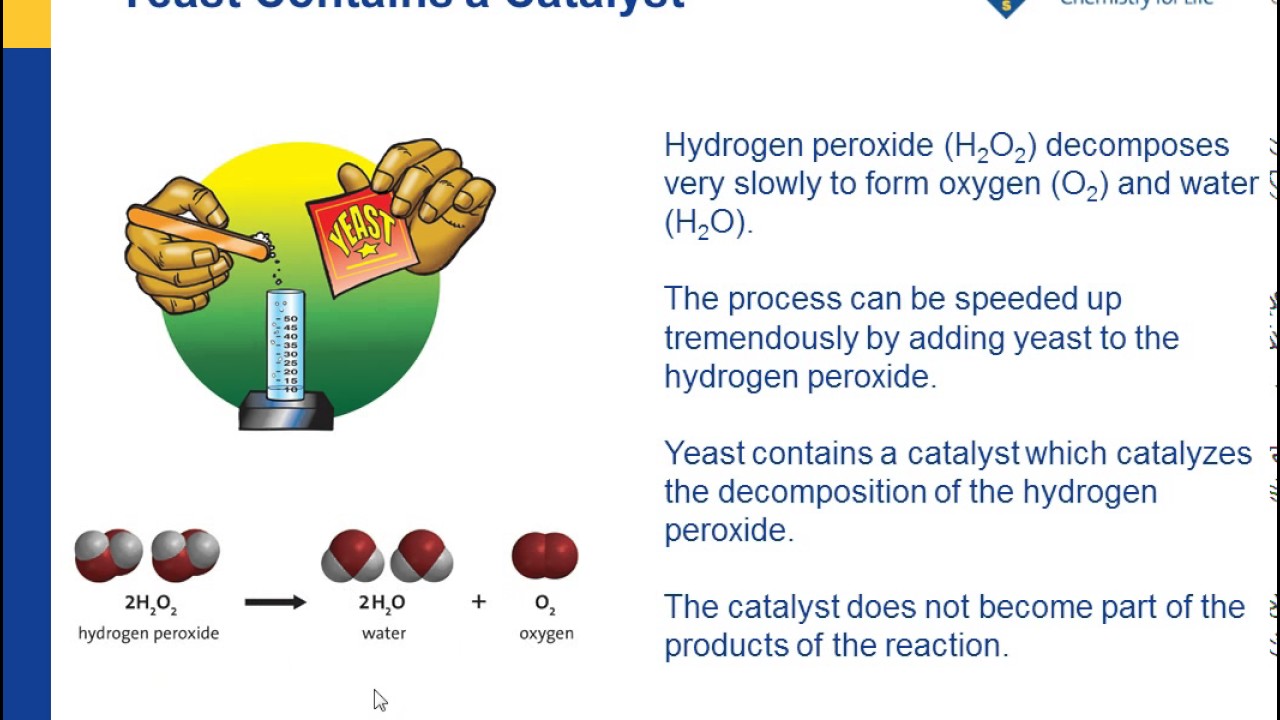
Table 1 - Time taken for immbolised balls of yeast to fall and rise in solutions of hydrogen peroxide. When yeast was added to hydrogen peroxide a chemical in the yeast causes a reaction in which the hydrogen peroxide breaks apart to form oxygen gas and water. You will feel a warmth to the outside of the container because energy is being released. For experiments at 4ºC a stock solution of 10 vol H2O2 was. Rearrange PVnRT to solve for n then plug in your known values for P V R and T.
 Source: pinterest.com
The yeast helps to remove the oxygen from the hydrogen peroxide creating tons of tiny bubbles that made all that cool foam. You will feel a warmth to the outside of the container because energy is being released. As the process progresses the dishwashing soap catches the oxygen that is released by the peroxide. As a small amount of hydrogen peroxide generates a large volume of oxygen the oxygen quickly pushes out of the container. When the yeast is mixed with the hydrogen peroxide it causes a reaction which then creates foam that moves up and out of the bottle.
 Source: pinterest.com
This creates oxygen at a much faster rate which you can see bubbling inside of the graduated cylinder. Ideal Gas Law - Finding Percent H2O2 with Yeast is to find the percentage of hydrogen peroxide in the solution. The oxygen was in the bubbles you saw. Hydrogen peroxide H2O2 is a common but poisonous by-product of cellular metabolism but H2O2 does not accumulate in cells because it is decomposed to water and oxygen gas. Oxygen is a gas and therefore wants to escape the liquid.
 Source: ar.pinterest.com
Create a Hydrogen Peroxide and Yeast Volcano. For experiments at 4ºC a stock solution of 10 vol H2O2 was. This is because yeast is a catalyst - a substance that can help the reactants react to each other faster without becoming part of the end products of the reaction. HYDROGEN PEROXIDE AND YEAST EXPERIMENT SET UP. Proper protective gear and parental supervision are absolutely necessary.
 Source: pinterest.com
The yeast helps to remove the oxygen from the hydrogen peroxide creating tons of tiny bubbles that made all that cool foam. Enhanced growth inhibition of 16 yeast species exposed to hydrogen peroxide and iodine concurrently. Watch your volcano foam and fizz. I explain that Bakers Yeast is a one-celled organism and it is unactive kind of like hibernating in the package. Yeast and Hydrogen Peroxide Experiment.
 Source: pinterest.com
When the yeast is mixed with the hydrogen peroxide it causes a reaction which then creates foam that moves up and out of the bottle. Table 1 - Time taken for immbolised balls of yeast to fall and rise in solutions of hydrogen peroxide. In preliminary experiments 2 mM iodine or 6 mM hydrogen peroxide in solid YEPD medium completely inhibited the growth of all tested Scerevisiae haploid strains data not shown. You will feel a warmth to the outside of the container because energy is being released. Adding the yeast to the hydrogen peroxide helps this breaking-down process occur much faster.
 Source: pinterest.com
In spot tests carried out for 16 different yeast species Figure 1. Oxygen is a highly reactive gas adult supervision recommended for this project. Adding the yeast to the hydrogen peroxide helps this breaking-down process occur much faster. As the process progresses the dishwashing soap catches the oxygen that is released by the peroxide. Next add food coloring as much as you like my son is very generous.
 Source: pinterest.com
Watch your volcano foam and fizz. Oxygen is a gas and therefore wants to escape the liquid. The experiment uses Hydrogen peroxide and dry yeast. If you like you can build a model volcano shape around the bottle using clay or a paper cone. The hydrogen peroxide produces wate.
 Source: pinterest.com
Next add food coloring as much as you like my son is very generous. Enhanced growth inhibition of 16 yeast species exposed to hydrogen peroxide and iodine concurrently. This foam is actually oxygen that is being released from the hydrogen peroxide. Then squirt dish soap into flask or bottle and swish it around a bit to mix. For your background research be sure that you understand substrate catalyst reaction rate catalase.
 Source: pinterest.com
When yeast was added to hydrogen peroxide a chemical in the yeast causes a reaction in which the hydrogen peroxide breaks apart to form oxygen gas and water. When the hydrogen peroxide comes into contact with the yeast it starts breaking down into water and oxygen. Table 1 - Time taken for immbolised balls of yeast to fall and rise in solutions of hydrogen peroxide. Hydrogen peroxide H2O2 is a common but poisonous by-product of cellular metabolism but H2O2 does not accumulate in cells because it is decomposed to water and oxygen gas. Abstract Yeast contains an enzyme called catalase that acts as a catalyst for the reaction that breaks down hydrogen peroxide into oxygen and water 2H 2 O 2 2H 2 O O 2Safety note.
 Source: pinterest.com
Watch your volcano foam and fizz. This reaction causes the temperature to go up. This foam is actually oxygen that is being released from the hydrogen peroxide. Then add about 1 teaspoon of yeast to the peroxide. Hydrogen peroxide breaks down naturally over time especially when exposed to light but in this reaction the yeast causes that breakdown to happen much quicker.
 Source: pinterest.com
What happens when hydrogen peroxide mixed with yeast. In preliminary experiments 2 mM iodine or 6 mM hydrogen peroxide in solid YEPD medium completely inhibited the growth of all tested Scerevisiae haploid strains data not shown. The goal for Experiment 1. This volcano is more reactive than a standard vinegar and baking soda volcano. When yeast was added to hydrogen peroxide a chemical in the yeast causes a reaction in which the hydrogen peroxide breaks apart to form oxygen gas and water.
 Source: pinterest.com
Stir in the yeast or swirl it around the container. If you like you can build a model volcano shape around the bottle using clay or a paper cone. When yeast was added to hydrogen peroxide a chemical in the yeast causes a reaction in which the hydrogen peroxide breaks apart to form oxygen gas and water. This foam is actually oxygen that is being released from the hydrogen peroxide. As a small amount of hydrogen peroxide generates a large volume of oxygen the oxygen quickly pushes out of the container.
 Source: es.pinterest.com
Hydrogen peroxide will slowly release oxygen molecules on its own but the addition of yeast as a catalyst speeds up the reaction and. The final result is tons of bubbles. When yeast was added to hydrogen peroxide a chemical in the yeast causes a reaction in which the hydrogen peroxide breaks apart to form oxygen gas and water. Hydrogen peroxide breaks down into oxygen and water. How can you take this experiment further.
 Source: pinterest.com
In preliminary experiments 2 mM iodine or 6 mM hydrogen peroxide in solid YEPD medium completely inhibited the growth of all tested Scerevisiae haploid strains data not shown. We enjoyed doing the experiment and observing the how the two different types of peroxide 3 and 6 caused a different reaction. The yeast helps to remove the oxygen from the hydrogen peroxide creating tons of tiny bubbles that made all that cool foam. The decomposition of the hydrogen peroxide is mediated by catalase an enzyme present in most cells. In spot tests carried out for 16 different yeast species Figure 1.
 Source: pinterest.com
Pour the same amount of hydrogen peroxide into each container unless you are just using one container. Then squirt dish soap into flask or bottle and swish it around a bit to mix. Fill your bottle with approximately 2 cups of hydrogen peroxide. Gently shake the bottle back and forth to mix the yeast and peroxide. The goal for Experiment 1.
This site is an open community for users to do submittion their favorite wallpapers on the internet, all images or pictures in this website are for personal wallpaper use only, it is stricly prohibited to use this wallpaper for commercial purposes, if you are the author and find this image is shared without your permission, please kindly raise a DMCA report to Us.
If you find this site beneficial, please support us by sharing this posts to your favorite social media accounts like Facebook, Instagram and so on or you can also save this blog page with the title hydrogen peroxide and yeast experiment by using Ctrl + D for devices a laptop with a Windows operating system or Command + D for laptops with an Apple operating system. If you use a smartphone, you can also use the drawer menu of the browser you are using. Whether it’s a Windows, Mac, iOS or Android operating system, you will still be able to bookmark this website.


